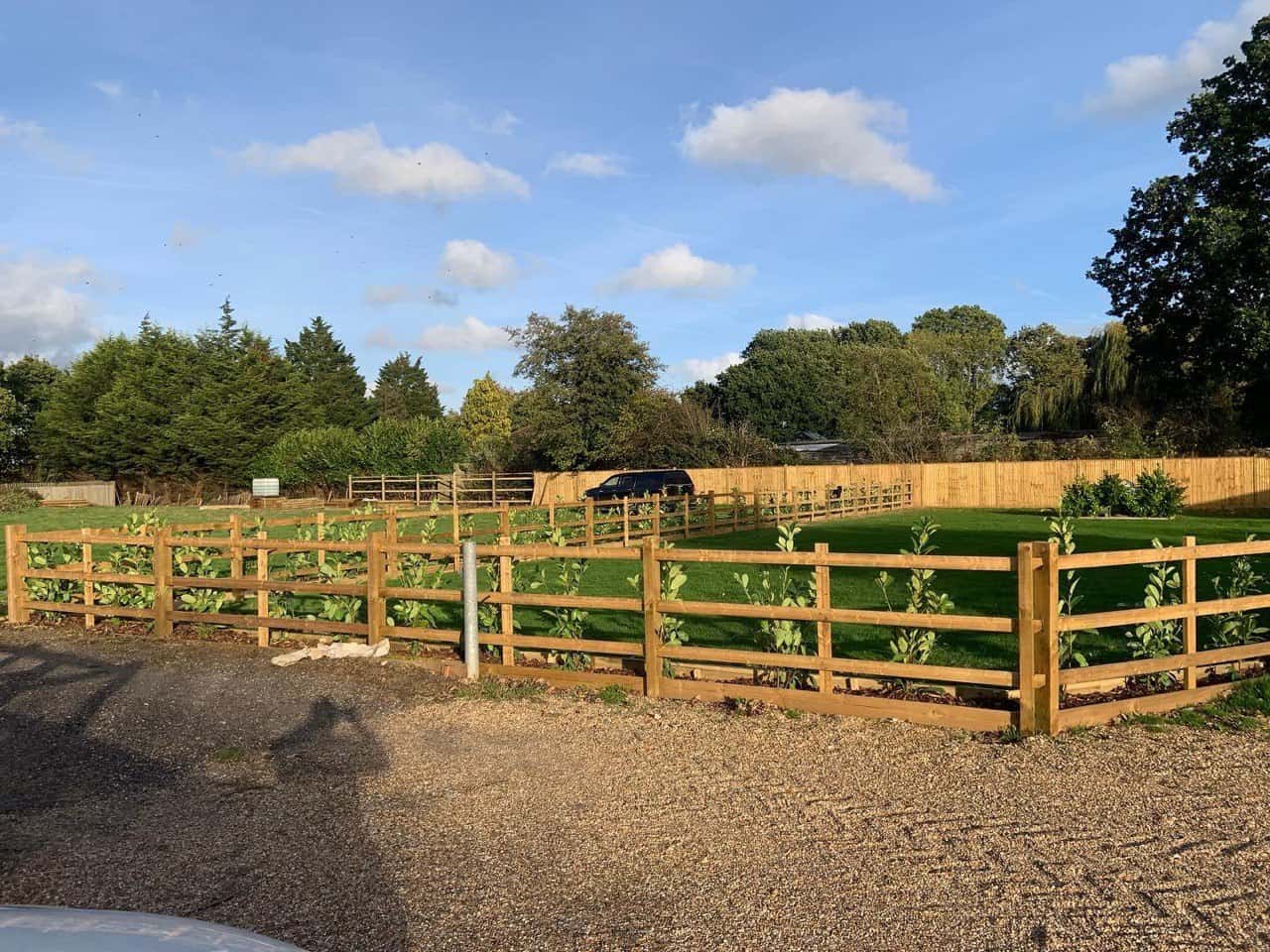
When Should You Replace an Old or Damaged Picket Fence?
Picket fencing is a popular choice for creating an attractive, clearly defined garden boundary without making an outdoor space feel overly enclosed. Its traditional appearance can complement many properties, while the individual boards provide a practical way to separate lawns, paths, front gardens and other areas.
Like any outdoor timber structure, however, a picket fence is continually exposed to changing weather conditions. Over time, posts can weaken, boards may deteriorate and entire sections can begin losing their stability. Individual defects can often be repaired, but there comes a point when replacing the fence provides a more effective solution than continuing to repair increasingly worn components.
For property owners in Newmarket, Suffolk, knowing the difference between repairable damage and general deterioration can make it easier to decide what your fencing actually needs.
Does a Damaged Picket Fence Always Need Replacing?
No. A damaged picket fence does not automatically require complete replacement.
One of the advantages of traditional timber fencing is that individual components can often be repaired or replaced. If the main structure remains strong, attention can be focused on the affected area.
For example, repair may be suitable when there are:
- One or two damaged pickets
- A small number of loose boards
- Minor movement within one section
- Localised damage to a rail
- An isolated problem with a fence post
- Otherwise sound timber throughout the fence
The important consideration is whether the defect is genuinely isolated or part of a wider pattern of deterioration.
1. Several Fence Posts Have Become Unstable
Posts are fundamental to the stability of a picket fence. They support the rails and help keep the entire fence properly aligned.
A single weakened post may sometimes be replaced without disturbing the rest of the fencing. However, if several posts are leaning, moving or deteriorating near ground level, this can indicate that the supporting structure is reaching the end of its useful condition.
Repeatedly repairing individual sections may provide limited benefit if neighbouring posts are beginning to develop similar problems.
2. Rot Has Spread Through Multiple Components
Timber fencing naturally faces prolonged exposure to moisture.
Localised deterioration can sometimes be addressed by replacing an individual picket or another affected component. Widespread decay is more significant.
Check whether deterioration appears across:
- Multiple pickets
- Horizontal rails
- Fence posts
- Lower sections close to the ground
- Several adjoining fence panels or runs
Where significant deterioration affects numerous structural components, replacement can provide a more dependable result than trying to preserve increasingly weakened timber.
3. The Fence Has Started Leaning
A properly installed picket fence should maintain a consistent, upright line.
If a substantial section begins leaning, the problem may extend beyond one loose board. Movement can be associated with weakened posts, deteriorating fixings or general loss of structural stability.
Minor movement in one location may still lend itself to repair. When several sections are leaning in different directions, the condition of the entire fence should be assessed.
Simply straightening the visible boards without addressing the reason for the movement is unlikely to provide a lasting solution.
4. Too Many Pickets Need Replacing
Individual pickets are among the easier parts of this fencing style to replace.
If one board has split or become damaged, replacing that particular component can restore the appearance effectively.
The situation changes when numerous pickets are showing similar deterioration.
A fence containing many cracked, loose, warped or weakened boards may indicate that the timber has weathered consistently across the installation. Replacing one picket after another can then become an ongoing process rather than a lasting repair.
5. The Horizontal Rails Are Deteriorating
The rails running between the posts provide the framework onto which the pickets are secured.
Because much of the visible attention naturally goes towards the upright boards, deteriorating rails can sometimes be overlooked.
Problems can become apparent when:
- Pickets repeatedly become loose
- Rails begin splitting
- Sections feel less rigid than before
- Fixings no longer hold securely
- Several boards move together
If the supporting rails have substantially deteriorated, replacing individual pickets may do little to restore the fence’s overall strength.
6. Repairs Are Becoming Increasingly Frequent
An occasional fencing repair is normal.
Repeated repairs across different parts of the same ageing fence can tell a different story.
For example, you might replace one post, then discover deteriorating rails elsewhere, followed by several damaged pickets a short time later. Each individual defect may be repairable, but together they suggest that the fence is declining more generally.
Looking at the pattern of problems rather than the latest defect can help determine whether replacement is becoming the more practical option.
7. The Fence No Longer Provides a Consistent Boundary
Picket fencing does more than improve appearance. It also creates a clear boundary and helps organise different parts of an outdoor space.
When sections become loose, gaps widen or posts begin leaning, the fence may stop performing this function effectively.
This can leave a garden looking poorly defined and make the entire boundary appear neglected.
A new fence can restore a straight, consistent line and create a much more purposeful finish around the property.
8. Previous Repairs No Longer Blend With the Original Fence
Over many years, a picket fence can accumulate replacement boards, posts and rails.
There is nothing inherently wrong with this when the main structure remains sound. However, extensive repairs can eventually leave the fence with components at very different stages of weathering.
The result may be:
- An inconsistent appearance
- Uneven board spacing
- Sections sitting at different heights
- Older timber alongside numerous replacement pieces
- Different levels of structural stability
When most of the original fence has deteriorated, complete replacement provides an opportunity to restore consistency across the entire boundary.
Should You Repair or Replace?
The decision is best made by considering the fence as a complete structure.
Repair may be appropriate when:
Damage is limited, the posts remain secure, the rails are structurally sound and most pickets remain in good condition.
Replacement may be more appropriate when:
Several posts are failing, deterioration is widespread, rails have weakened, numerous pickets need attention or different sections repeatedly require repairs.
The key question is not simply whether another repair can be made. It is whether that repair will restore a dependable fence when the condition of everything around it is taken into account.
Why the Condition of Fence Posts Matters So Much
When assessing an older picket fence, the posts deserve particular attention.
Even attractive, well-maintained pickets cannot create a stable fence if the posts supporting them are deteriorating.
A fence may initially appear to have only superficial problems, but movement when sections are touched or visibly leaning posts can reveal weaknesses within the supporting structure.
Professional assessment can determine whether individual post replacement is sufficient or whether deterioration has become widespread enough to justify renewing a larger section.
Weather Exposure Gradually Affects Timber Fencing
Outdoor fencing is constantly exposed to changing conditions.
Repeated cycles of wetting and drying can gradually affect timber, while wind places pressure on posts, rails and fixings. Small weaknesses may initially be barely noticeable but become increasingly apparent as the fence ages.
Regular maintenance and prompt attention to minor defects can help keep a picket fence serviceable for longer.
However, maintenance cannot indefinitely compensate for timber that has deteriorated throughout the structure. Once several components have become substantially weakened, replacement may provide a better foundation for future maintenance.
Replacement Is an Opportunity to Improve the Layout
Replacing an old picket fence does not necessarily mean reproducing every detail of the existing installation.
It can provide an opportunity to consider whether the current layout still suits the garden.
Factors worth considering include:
- Fence height
- Picket spacing
- Position of entrances
- Gate width and location
- Boundary alignment
- Relationship with paths and planting
- The overall style of the garden
A professionally planned replacement can therefore address the problems with the old fence while creating a boundary that better suits how the outdoor space is currently used.
Why Correct Installation Matters
The longevity of a replacement picket fence depends on much more than the appearance of the boards.
The supporting structure needs careful attention. Posts must provide a stable foundation, rails need to be positioned correctly and individual pickets should form a consistent, secure run.
Good installation helps prevent premature movement and creates a fence that looks deliberately designed rather than uneven or improvised.
Professional fencing work also ensures that the finished boundary is assessed as a complete system, rather than concentrating only on the most visible components.
Maintaining a New Picket Fence
Once replacement fencing has been installed, regular observation can help identify small problems before they spread.
It is worth watching for:
- Developing movement in individual sections
- Loose pickets
- Damaged rails
- Changes around posts
- Split or deteriorating timber
- Sections becoming uneven
Prompt repairs are particularly valuable while the rest of the structure remains sound.
This is the point at which targeted maintenance works best: correcting individual defects before they develop into widespread deterioration.
Professional Picket Fencing in Newmarket
At Fast Fix Fencing Newmarket, we provide professional fencing services throughout Newmarket, Suffolk.
When an older picket fence begins deteriorating, the first priority should be understanding how widespread the problem has become. A small number of damaged components may only require targeted repairs, while widespread deterioration across posts, rails and pickets can make replacement the more suitable approach.
Professional assessment helps ensure that work is based on the actual condition of the fence rather than simply replacing whichever component currently looks worst.
Conclusion
An old or damaged picket fence does not always need replacing. Where the structure remains strong and deterioration is confined to a few components, professional repairs can restore both stability and appearance.
Replacement becomes more relevant when several posts are unstable, rails are deteriorating, numerous pickets are damaged, sections are leaning or repairs are becoming increasingly frequent. At that stage, the problem is no longer one isolated defect but the declining condition of the fence as a whole.
For property owners in Newmarket, Suffolk, Fast Fix Fencing Newmarket can assess existing picket fencing and recommend an appropriate solution based on its condition. If your fence is becoming unstable, damaged or increasingly difficult to maintain, contact our team to discuss professional fencing repairs or replacement.
Call us on: 01638 591 198
Click here to find out more about Fast Fix Fencing Newmarket
Click here to complete our contact form and see how we can help with your fencing needs.