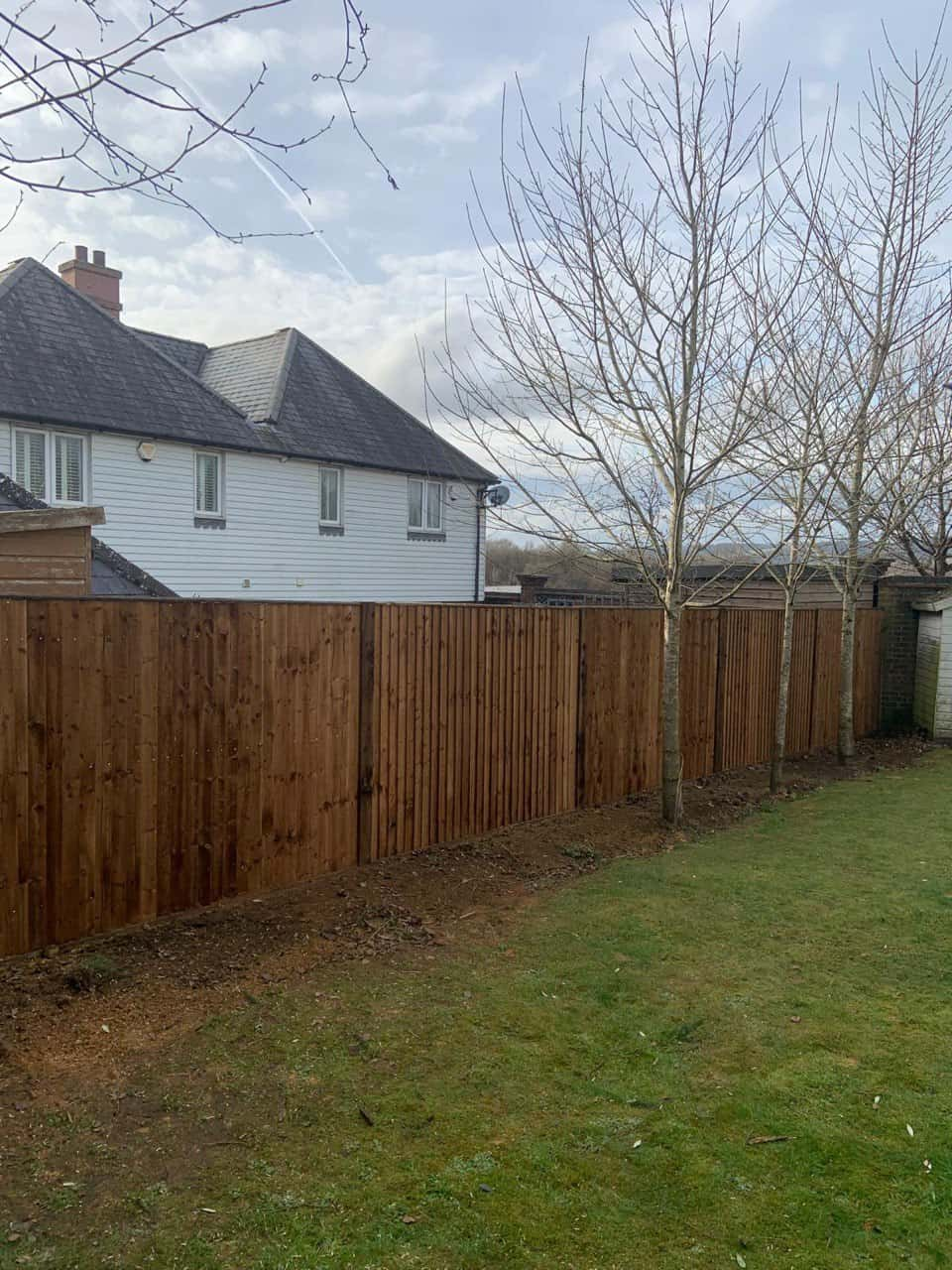
Feather Edge Fencing: A Complete Guide for Homeowners
Feather edge fencing is a popular choice for homeowners who want a strong, practical and attractive boundary around their garden. Its overlapping timber boards create a solid fence that offers privacy, helps define property boundaries and provides a traditional appearance that suits many homes.
For homeowners in Newmarket, Suffolk, feather edge fencing can be a dependable option for creating a more sheltered and secure outdoor space. However, like any timber fence, it needs suitable installation and ongoing maintenance to remain in good condition. Understanding how feather edge fencing works, what problems to look out for and when repairs may be needed can help you get the most from your garden boundary.
What Is Feather Edge Fencing?
Feather edge fencing is made from individual vertical timber boards that are thicker along one edge and taper towards the other. These boards are fitted with an overlap, creating a continuous panel with fewer gaps than many alternative fencing styles.
The boards are typically secured to horizontal supporting rails attached to timber posts. Depending on the design, the fence may also include gravel boards at the bottom to help separate the timber boards from direct contact with the ground.
This construction creates a solid, robust boundary that can provide privacy while giving the garden a neat, traditional finish. Individual boards can also be replaced when damaged, making targeted repairs possible without necessarily rebuilding the entire fence.
The Main Benefits of Feather Edge Fencing
One of the main advantages of feather edge fencing is privacy. The overlapping boards create a close-fitting barrier that limits visibility into the garden, making it suitable for households that want a more secluded outdoor area.
Its construction also provides a sturdy boundary when the posts, rails and boards are properly installed and maintained. The overlapping design helps create a consistent appearance, while the timber can be treated or finished to complement the garden.
Another benefit is its repairability. If a small number of boards split, become loose or deteriorate, they can often be replaced individually. This allows homeowners to address localised damage before it spreads to other parts of the fence.
For properties in Newmarket, Suffolk, feather edge fencing offers a practical balance of privacy, strength and a natural timber appearance.
Common Feather Edge Fencing Problems
Although feather edge fencing is designed for everyday outdoor use, exposure to rain, wind and changing temperatures can gradually affect its condition. Recognising early warning signs can help prevent minor faults from becoming more extensive.
Loose or Broken Fence Boards
Individual boards may become loose when their fixings deteriorate or the timber splits around nails and screws. Strong winds can make the problem worse, particularly if several boards are already weakened.
A damaged board may be repairable or replaceable, depending on the extent of the deterioration and the condition of the supporting rails.
Leaning or Unstable Fence Posts
Fence posts provide the main structural support for the entire fence. If a post begins to lean, the panels may become uneven, gaps can appear and the fence may be less able to withstand wind pressure.
The cause may include a weakened post, movement in the ground or deterioration around the base. Simply straightening the visible section will not resolve the issue if the underlying support remains unstable.
Rotting Timber
Timber that remains damp for extended periods can become vulnerable to rot, especially around ground level and where water collects. Gravel boards can help protect the lower fence boards by reducing direct contact with the soil.
Soft, discoloured or crumbling timber may indicate deterioration. Where rot affects a structural post or rail, a more substantial repair may be necessary than replacing a single board.
Damaged Rails and Fixings
Horizontal rails hold the boards in position and transfer loads to the fence posts. Cracked rails, loose fixings or decayed timber can cause sections of fencing to move or sag.
A proper inspection should consider the supporting structure as well as the visible boards, since replacing damaged boards alone may not resolve the underlying problem.
How to Maintain Feather Edge Fencing
Regular checks can help keep a feather edge fence in good condition. Walk along the boundary periodically and look for loose boards, leaning posts, cracked rails and signs of decay, paying particular attention to the lower sections where moisture can accumulate.
Keep soil, leaves and other debris from building up against the base of the fence. Where appropriate, use a suitable timber treatment to help protect exposed surfaces, following the manufacturer’s instructions.
After periods of strong wind, check for movement or newly damaged boards from a safe position. Avoid leaning on an unstable fence or attempting to dismantle damaged sections without the correct equipment.
Prompt attention to small defects can help preserve the fence’s appearance and reduce the likelihood of more extensive repairs.
When Should You Repair or Replace Feather Edge Fencing?
The right approach depends on how widespread the damage is and whether the fence’s supporting structure remains sound.
If only a few boards are cracked or missing and the posts and rails are stable, targeted repairs may be sufficient. If several rails have failed, multiple posts are leaning or significant rot is present, more extensive work may be required.
Replacing individual boards without checking the overall structure can lead to recurring problems. A professional assessment helps establish whether the damage is isolated or part of a wider deterioration affecting the fence.
Fast Fix Fencing Newmarket can help homeowners identify the cause of fencing problems and determine the most suitable repair for their property.
Professional Feather Edge Fencing Repairs in Newmarket
A well-maintained fence improves privacy, defines the garden and helps keep outdoor spaces looking tidy. When boards become damaged or the structure starts to lean, timely repairs can restore its appearance and function.
Professional fencing repairs involve checking the boards, posts, rails and fixings to ensure that the work addresses the cause of the problem. This is particularly important when damage affects several connected sections or the stability of the fence.
For homeowners in Newmarket, Suffolk, Fast Fix Fencing Newmarket provides fencing repair services tailored to the condition and layout of your boundary.
Conclusion
Feather edge fencing is a practical choice for homeowners who value privacy, durability and a traditional timber finish. With regular maintenance and prompt attention to loose boards, damaged rails, unstable posts and timber rot, it can remain an effective garden boundary for years.
If your feather edge fence has become damaged, is leaning or needs attention, contact Fast Fix Fencing Newmarket to discuss your fencing repair requirements and arrange professional help suited to your property.
Call us on: 01638 591 198
Click here to find out more about Fast Fix Fencing Newmarket
Click here to complete our contact form and see how we can help with your fencing needs.